The Pai-Yokoyama Moʻokūʻauhau
Ten generations from Kaʻū
A genealogy of the Pai-Yokoyama line of Kaʻū district, Hawaiʻi Island — traced through ten documented generations, from an ancestor born a lifetime before Western contact to the present day.
Compiled from the Mormon Genealogy database, Ancestry.com, and our family’s moʻokūʻauhau. Ancestral lineage verified by the Office of Hawaiian Affairs (OHA) — the State of Hawaiʻi’s authoritative source for Native Hawaiian ancestry.
A moʻokūʻauhau is a genealogy — in Hawaiian tradition, a sacred chant of one’s ancestral lineage. Because Hawaiian was an oral language, ours was never written down but remembered: names carried forward by voice, from one generation to the next, across the centuries. Our line reaches back to 1065 AD; it is held here to ten generations by design — to show that our family has lived on this land since long before the first European contact in 1778.
born 1710 · Kingdom of Hawaiʻi
Kaʻū, Hawaiʻi Island
The earliest documented ancestor of the line, born in the Kaʻū district in 1710 — sixty-eight years before Captain Cook first reached the Hawaiian Islands. He and Kauakahiwahine had at least two sons, carrying the family forward from the era of the ruling chiefs.
born ~1712 · Kingdom of Hawaiʻi
Waimea, Hawaiʻi Island
born 1734 · Kingdom of Hawaiʻi
Kaʻū, Hawaiʻi Island
Son of Mohai and Kauakahiwahine, born in Kaʻū in 1734 — still a generation before Western contact. He and Ululani continued the family in the same district where the line began.
of the Kingdom of Hawaiʻi
Hawaiʻi Island
On January 18, 1778, British explorer Captain James Cook became the first recorded European to sight the Hawaiian Islands.
born ~1780 · Kingdom of Hawaiʻi
Hawaiʻi Island
Keawekuloa was born around 1780, just two years after the first European, Captain James Cook, “discovered” the Hawaiian Islands in 1778. He lived through the unification of the Hawaiian Islands under Kamehameha I. He and Kameheu were the parents of the next generation of the Pai line.
born ~1780 · Kingdom of Hawaiʻi
Hawaiʻi Island
born ~1800 · Kingdom of Hawaiʻi
Hawaiʻi Island
Born around 1800 and died in his home district on Hawaiʻi Island, Kingdom of Hawaiʻi. He married Tahitian Princess Kinimaka, joining the family to the Kinimaka line of Tahitian royal descent — one of our family’s more remarkable threads in our moʻokūʻauhau.
born ~1800
of the Kinimaka line
The arrival of Europeans in Hawaiʻi — beginning with Captain James Cook in 1778 — brought new trade and technology, but also infectious diseases to which Native Hawaiians had virtually no immunity. Smallpox, measles, influenza, and tuberculosis swept through the islands with devastating force.
Over the following century, an estimated 90–95% of the Native Hawaiian population perished — one of the most catastrophic demographic collapses of any Indigenous people in recorded history.
The first American Protestant missionaries arrived in the Hawaiian Islands on March 30, 1820, after sailing 164 days from Boston aboard the brig Thaddeus.
The first printed material in the Hawaiian language was pulled from a press on January 7, 1822. Until this moment, Hawaiian was a spoken language only — for generations, our family’s moʻokūʻauhau, culture, traditions, and way of life were carried entirely by voice and memory. Nothing was written down.
born 1839 · Kingdom of Hawaiʻi
Kawaihae · lived in South Kohala District
Born in Kawaihae, Hawaiʻi, Hawaiian Kingdom, in 1839, Kanehaku married Kapua Kupahu Moi in Kohala in 1880, and together they raised a large ʻohana — at least fifteen children. The family was settled in the South Kohala District by 1900.
born 1848 · Kingdom of Hawaiʻi
Kohala, Hawaiʻi Island · died 1924
Instituted by King Kamehameha III, the Great Māhele took effect on March 7, 1848, dividing Hawaiian lands into three parts — one-third Crown Lands for the monarch, one-third for the chiefs and managers (Konohiki / Aliʻi), and one-third for the government.
The Kuleana Act of 1850 is why my family — and most Native Hawaiians — were forced off the land they had lived on and cultivated for centuries. It required Hawaiians to claim their ancestral plots through unfamiliar Western surveys, paperwork, and fees — a process shaped by the influence of American sugar-plantation owners and, in effect, built for Hawaiians to fail. More fundamentally, the very idea of privately “owning” land was foreign to a people who understood themselves as belonging to the ʻāina, not the reverse. Only a small fraction of Hawaiians secured small parcels; the rest passed to plantation owners and American businessmen. The consequences endure today: more Native Hawaiians now live on the continental U.S. than in Hawaiʻi, priced out by a cost of living driven ever higher by profit-seeking corporations and billionaire landowners such as Zuckerberg, Ellison, and Winfrey.
born 1892 · Kingdom of Hawaiʻi
born Kawaihae · died 20 December 1927 at Kalaupapa, Molokaʻi
Born in Kawaihae, Hawaiʻi, Hawaiian Kingdom, in 1892, Alfred married Alice Kaninau Nahaleʻa in Kawaihae in 1909. He died at just 35 at Kalaupapa, the isolated settlement on Molokaʻi where those with Hansenʻs disease were sent — and was buried there, far from his home shores. A quiet, sorrowful chapter in the family story.
born 1887 · Kingdom of Hawaiʻi
Kawaihae, Hawaiʻi Island · died 1936
On January 17, 1893, the Hawaiian monarchy was overthrown. A group of American and European sugar planters and businessmen — the “Committee of Safety” — deposed Queen Liliʻuokalani with the unauthorized support of U.S. Marines and US Minister to the Hawaiian Kingdom, John L. Stevens, establishing a provisional government to pursue annexation by the United States.
In the months after the January 1893 overthrow of Queen Liliʻuokalani, President Grover Cleveland sent former Congressman James H. Blount to investigate. Blount’s report, submitted July 17, 1893, concluded that U.S. diplomatic and military representatives had improperly helped depose the Queen — and that she should be restored to her throne.
On December 18, 1893, Cleveland told Congress the overthrow had been an abuse of U.S. authority, and declared that the United States bore a moral obligation to restore Queen Liliʻuokalani:
Yet the Kingdom was never restored. Cleveland’s envoy negotiated the Queen’s return, but the Provisional Government under Sanford B. Dole refused to relinquish power, claiming the United States had no right to interfere in Hawaiʻi’s internal affairs. Congress would not support the use of force, and Cleveland ultimately declined to act.
His successor reversed course entirely. President William McKinley signed a new annexation treaty in 1897; when it failed to win a two-thirds Senate majority, Congress annexed Hawaiʻi through the Newlands Resolution on July 7, 1898.
For Native Hawaiians, Blount’s findings and Cleveland’s 1893 message endure as an official acknowledgment — by a sitting U.S. President — that American representatives acted wrongfully in the overthrow. The moral obligation he named was never honored, and the Hawaiian Kingdom was never restored.
Hawaiʻi was officially annexed by the United States on August 12, 1898, through the Newlands Resolution signed by President William McKinley — following the illegal overthrow of Queen Liliʻuokalani and the establishment of the Republic of Hawaiʻi.
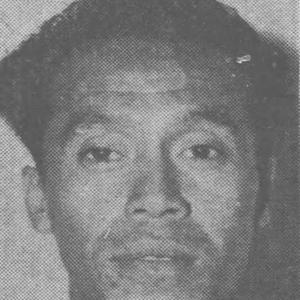
11 February 1909 – 2 September 1973
born Kailua-Kona · lived Honokōhau, North Kona · died Kauaʻi · buried Kōloa
Born in Kailua-Kona in 1909, William “Opelu” Pai married Sarah Kahalewai in North Kona in 1928. He resided in Honokōhau, North Kona, and died on Kauaʻi in 1973; he is buried at Kōloa Cemetery. A Hawaiian waterman and fisherman, Opelu is a member of the Hawaiʻi Swimming Hall of Fame, having completed the first crossing of the Molokaʻi Channel in 1939 — the 26 miles between Oʻahu and Molokaʻi — in 18 hours and 56 minutes. His record was not officially recognized as the first only because he was rowed 50 yards from shore to begin the swim.
1906 – 1982
Kona, Hawaiʻi Island
10 February 1930 – 11 October 1981
born Honokōhau, North Kona · died Waiʻanae, Oʻahu · buried Mililani
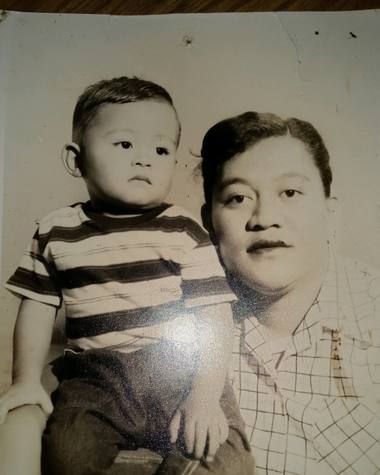
Melvin Sr.
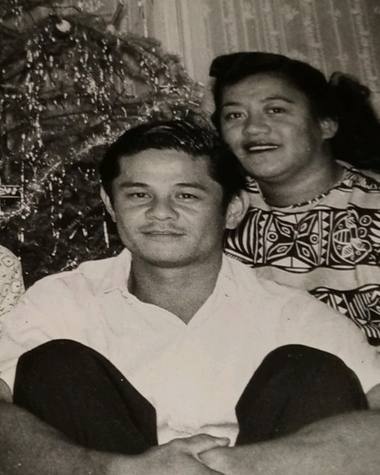
Born and raised in Honokōhau, North Kona District, in 1930, Alice married Katsuaki Yokoyama in 1950 — the marriage that carried the Pai line into the Yokoyama family. She died at home in Waiʻanae, Oʻahu, in 1981 and rests at Mililani Memorial Park. She was 100% Native Hawaiian.
1923 – 1955
Olaʻa, Hawaiʻi Island
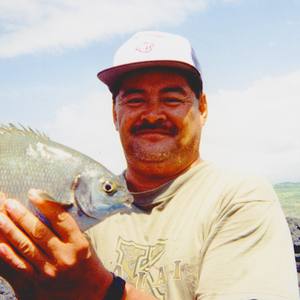
1952 – 2023 · married 13 June 1970
of Pāhala, Kaʻū District · Hawaiʻi Island
Son of Alice Pai and Katsuaki Yokoyama — and a son of Kaʻū through and through. He raised his four children, his eldest son and three younger daughters, in Pāhala in the Kaʻū District of Hawaiʻi Island, the home he loved. He married Winifred Leinaʻala Tamondong in 1970, and together they raised the tenth generation of the line. A man who treasured the simple pleasures of life, most of all fishing along the Kaʻū coastline. Diabetes — and the lack of access to dialysis — took him far too soon. It never should have happened.
born 1951
Honolulu, Oʻahu
Hawaiʻi officially became the 50th U.S. state on August 21, 1959, following the Hawaiʻi Admission Act signed by President Dwight D. Eisenhower.
born 12 September 1970
Honolulu, Oʻahu
The tenth documented generation of the Pai line of Kaʻū — carrying the moʻokūʻauhau forward, and the promise made to family, into the present day.
On November 15, 1988, President Ronald Reagan signed the Business Opportunity Development Reform Act of 1988 (Public Law 100-656) into law. Section 207 of that Act made Native Hawaiian Organizations (NHOs) eligible to participate in the SBA’s 8(a) Business Development Program by adding the definition of a Native Hawaiian Organization to Section 8(a) of the Small Business Act. Congress recognized that Native Hawaiians, like American Indians and Alaska Natives, had experienced unique historical and economic disadvantages.
The 1988 legislation defined an NHO as a nonprofit organization that:
- Serves Native Hawaiians,
- Is controlled by Native Hawaiians, and
- Uses its business activities to principally benefit Native Hawaiians.
The Apology Resolution (Public Law 103-150) was signed into law by President Bill Clinton on November 23, 1993 — the 100th anniversary of the illegal overthrow of the Kingdom of Hawaiʻi. It formally acknowledged U.S. participation in the overthrow and the suppression of Native Hawaiian sovereignty.
Today, Native Hawaiians continue to face challenges rooted in more than two centuries of historical change. The Hawaiian people have shown remarkable resilience, yet many of the hardships that began after Western contact still shape life in Hawaiʻi. For most, the struggle is no longer for independent sovereignty — it is for survival.
Key challenges facing Native Hawaiians
- Preserving the Hawaiian language, culture, and traditional practices.
- Protecting ancestral lands, sacred sites, and natural resources.
- Addressing the high cost of housing and the displacement of Native Hawaiian families from their homeland.
- Improving health outcomes and reducing disparities.
- Expanding access to quality education and workforce opportunities.
- Creating sustainable, high-paying careers so Native Hawaiians can remain in Hawaiʻi.
- Preserving Native Hawaiian history and ensuring it is accurately taught and understood.
- Protecting federal and state programs that support Native Hawaiians.
- Responding to increased legal and political challenges affecting Native Hawaiian programs as DEI initiatives face greater scrutiny.
- Building long-term economic self-sufficiency for future generations.
Congress recognized that Native Hawaiians faced unique historical and economic challenges, and created Native Hawaiian Organizations (NHOs) to help address them. That is why Congress authorized NHO-owned companies to participate in the SBA 8(a) Business Development Program, and permitted Department of Defense sole-source contracts of up to $100 million for eligible NHO-owned 8(a) firms.
The purpose was never to enrich non-Native Hawaiians through federal contracting. The intent was to create jobs, invest in education, strengthen Native Hawaiian communities, and build the economic foundation Native Hawaiians need to survive and thrive in the 21st century.